
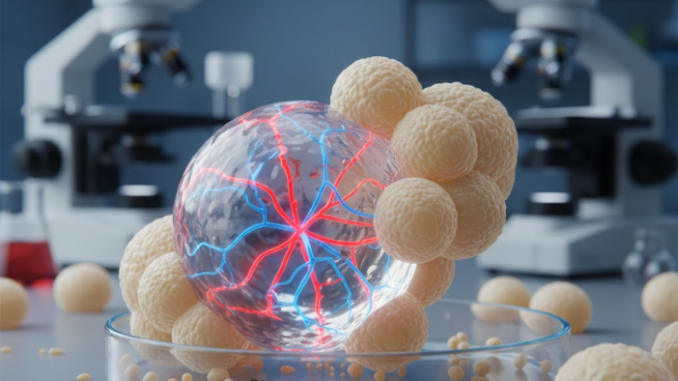
Okay, lean in. This isn’t some boring science-y summary with snooze-buttons for brains. No. This is the kind of stuff that makes you go, “Wait… fat might actually be good for something?” Because guess what – researchers have literally turned fat cells into cancer’s competition machine, and it’s wild.
Here’s what happened. Scientists took normal fat cells – the kind most of us love to hate – and reprogrammed them so they gulp down nutrients way faster than cancer cells can. Then they stuffed these turbo-charged adipocytes (that’s science speak for fat cells) right next to tumors. Boom. Tumors starve. Growth slows. Progression stalls. It’s like giving cancer a rival that’s hungrier, thirstier, and downright meaner at the nutrient buffet.
You’re about to get the full story, with scenarios, metaphors, and the kind of real-talk your brain actually remembers.
What the Heck Are Engineered Adipocytes?
Alright, picture this: you know how at a buffet there’s always that one person who eats everything first? That’s what these engineered fat cells are like. They grab sugar and fat – the staples tumors need to thrive – before the bad guys even get a fork in hand.
These aren’t ordinary fat cells. Scientists tweaked them using tools (like CRISPRa) that jam the gas pedal on genes normally involved in burning energy – stuff like UCP1 and its buddies – so the cells behave more like brown fat – you know, the kind that actually burns calories for heat. Then they either co-cultured them with cancer cells in dish experiments or implanted them in mice. In both cases, cancer growth slowed down. Pretty badass.
Let’s break that down so it doesn’t sound like rocket surgery:
- Normal fat cells: Chillin’, storing energy like mini warehouses.
- Engineered adipocytes: Turbo tenants that suck up carbs and lipids like there’s no tomorrow.
- Tumors: Sneaky moochers that rely on those same nutrients to grow.
- Outcome: Turbo tenants steal the show – and leave tumors hangry.
Why This Isn’t Just Another Lab Trick
Here’s the thing. Most cancer treatments are like blunt sledgehammers. Chemo? Kills everything. Radiation? Burns both good and bad cells. Immunotherapy? Works great… until it doesn’t. But this? This is sabotage – stealing the very fuel cancer needs.
Let me paint you a scenario:
Imagine a small city (your body). The bad guys (tumors) are sneaking into factories (cells) and stealing fuel, making chaos. Instead of dropping bombs everywhere, you set up a new fuel station that’s so attractive it pulls all the truck drivers away from the bad guys. Suddenly the thieves are stuck without gas. That’s the vibe here.
And the scientists didn’t just do this in one cell type. They tested breast, pancreatic, colon, and prostate cancer models – in dishes and in mice – and the starving-tumor trick worked again and again.
How They Made Fat Cells Go From Zero to Hero
Let’s get a bit nerdy (but still fun, promise). The secret sauce is this technique called CRISPR activation – CRISPRa for short. You can think of it like editing the dials on a car engine to make it roar harder, not just turning the key.
The researchers cranked up genes like UCP1 – which is usually more active in brown fat – so the white fat cells suddenly behave like they’re packed with energy burners. This makes them chug glucose and fatty acids like someone downing an all-you-can-eat pizza after a week of fasting.
Here’s the twist: they didn’t stop at just glucose. In custom tests, they showed they could even make these modified fat organoids hog uridine (a different nutrient some cancers depend on) and slow those tumors too. It’s like swapping out one bait for another depending on what the bad guys are craving.
Real-Talk Case Study: Meet “Turbo” Adipocytes
Let’s invent a character: Turbo. Turbo is a lab-grown adipocyte with BIG appetite. He doesn’t just eat snacks – he devours the buffet. Now, imagine a mouse named Marvin with a pancreatic tumor that’s feeding off glucose like junkies at an open bar. Scientists implant Turbo right beside Marvin’s tumor. Within weeks, the tumor’s growth drops. Way down. The scientists measure less new blood vessel formation (which tumors need to grow big), and the tumor looks like it’s having a midlife crisis on the diet plan.
You’re probably thinking, but does this translate to humans? The researchers also took fat cells from actual human breast tissue, primed them the same way, and saw similar suppression of cancer organoids in lab dishes. That’s a step toward real therapeutic hope.
Boiling It Down: What This Means for the Future
Stop picturing this as just “another paper.” This is clever biological sabotage. Instead of trying to hammer tumors directly, these engineered adipocytes play offense – they compete. Cancer cells are kind of like greedy roommates who eat your groceries without asking. These engineered cells are louder, hungrier, and they shop smarter.
Here’s what could happen next:
1. New treatment strategies where engineered fat cells are transplanted around tumors.
2. Customised therapies that target different cancers by adjusting what the engineered cells absorb.
3. An approach that might sidestep some of the terrible side effects of traditional cancer treatments.
Does this mean we’re cured tomorrow? Hell no. But it’s a bold twist on fighting disease. It’s like switching from fighting with swords to winning with strategy. It makes you rethink fat not as the enemy, but as a sneaky ally when properly trained.