
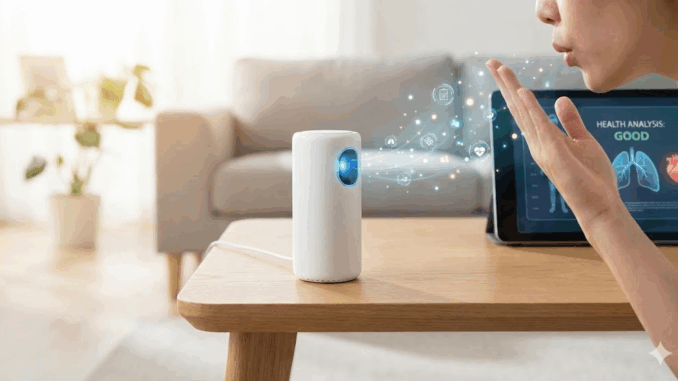
Imagine sitting in a doctor’s office, dreading the needle poke for a blood test, and wishing there was an easier way to get the same info. Well, a team of brainy folks at the University of Chicago might just be making that wish come true with a nifty little gadget they’re calling ABLE. This pint-sized device – about the size of a postcard – could change the game by sniffing out molecules in the air, no needles required. It’s like a high-tech nose for medicine and public health, and it’s got some seriously cool potential.
The idea behind ABLE, which stands for Airborne Biomarker Localization Engine (fancy, right?), is to grab tiny particles floating in the air – like viruses, bacteria, or even glucose levels from your breath – and turn them into liquid for easy analysis. This is a big deal because, until now, we’ve been stuck relying on blood or other liquids to detect this stuff. Think about it: every finger prick for diabetes or swab for a COVID test involves liquid. But detecting molecules in the air? That’s been a tough nut to crack, mostly because those particles are super rare – like finding a single sprinkle in a giant cake.
Here’s how ABLE pulls off this magic trick. It’s got a mini pump that sucks in air, a humidifier that adds a bit of moisture, and a tiny cooling system that chills things down. This makes the air condense into droplets, trapping those elusive particles inside. The droplets slide down a slick surface (think water on a freshly waxed car) into a little reservoir, where existing lab equipment can analyze them. It’s like turning thin air into a testable sample – pretty wild!
The researchers, led by Professor Bozhi Tian, are pumped about this. Tian called it one of the most thrilling projects he’s worked on, and you can see why. They’ve already shown ABLE can do some impressive stuff, like picking up glucose levels from breath (hello, easier diabetes monitoring!) or spotting E. coli in the air. In one fun test, they even used a cup of coffee to see if the device could capture its aroma. Spoiler: it worked so well they could smell the coffee in the condensed liquid – no lab tests needed!
The spark for this project came from a visit Tian made to the neonatal intensive care unit at UChicago’s Comer Children’s Hospital. There, Dr. Erika Claud, a pediatric expert, dreamed of a way to test tiny premature babies without poking them. ABLE could be a game-changer for those fragile little ones, letting doctors track health markers without invasive procedures. But the possibilities don’t stop there. The team thinks ABLE could monitor air in hospitals for viruses, help people with conditions like inflammatory bowel disease by detecting breath markers, or even pave the way for wearable health trackers. Imagine a smartwatch that checks your health just by analyzing the air you exhale!
Of course, there’s still work to do. Scientists need to figure out exactly which airborne molecules to look for – kind of like creating a catalog of “health smells.” They also want to shrink ABLE down to make it wearable, maybe even stylish. Plus, the lead researcher, Jingcheng Ma (now at the University of Notre Dame), is geeking out over how this could unlock new physics insights about how particles behave in air. That’s the kind of nerdy passion that makes science so exciting.
The study dropped in Nature Chemical Engineering on May 21, and the team’s already collaborating with innovators at UChicago’s Polsky Center to bring this tech to the real world. So, next time you’re wincing at the thought of a needle, just picture a future where a tiny device sniffs the air and tells your doctor what’s up. Science fiction? Nope, just science doing its thing.
source: www.sciencedaily.com