
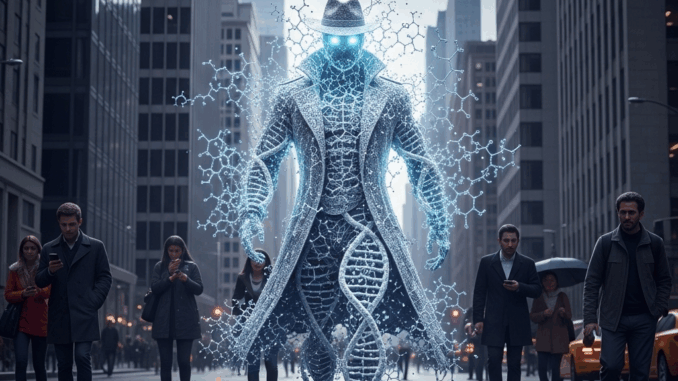
You’ve probably heard that our DNA is like a blueprint for life, packed with instructions for building proteins – the workhorses of our cells. For years, scientists have leaned on a core idea in biology: DNA passes its info to RNA, which then churns out proteins. Simple, right? But here’s the kicker: only about 2% of our genome actually codes for proteins. So, what’s the deal with the other 98%? Is it just sitting there, twiddling its thumbs, or does it have a secret role to play?
For a long time, some folks dismissed this massive chunk of the genome as “junk DNA” – like the packing peanuts of our genetic code. But a groundbreaking study published in Cell is flipping that narrative on its head. Turns out, parts of this so-called junk are anything but useless. They’re functional, hardworking noncoding RNAs, and they’re pulling some serious weight in our cells, from helping us grow to playing a role in cancer.
Cracking the Code with CRISPR’s RNA-Targeting Superpower
Scientists at New York University and the New York Genome Center decided to dig into this mystery. They used a cutting-edge tool called CRISPR, but with a twist. Instead of its usual DNA-editing gig (think of it as a molecular pair of scissors for genes), they harnessed an enzyme called Cas13 to zero in on RNA. This let them poke around the genome without messing with nearby protein-coding genes or other important bits.
Led by Neville Sanjana, a rockstar professor at NYU and a core member of the New York Genome Center, the team went on a genome-wide treasure hunt. They scanned nearly 6,200 pairs of long noncoding RNAs (lncRNAs) and their protein-coding neighbors across five different human cell types, including kidney, leukemia, and breast cancer cells. Their mission? Figure out which of these lncRNAs are actually doing something important by knocking them out and watching what happens. Does the cell keep chugging along, or does it throw a tantrum and stop dividing?
“We’re not just reading the RNA’s resume anymore,” said Simon Müller, a postdoctoral researcher in Sanjana’s lab and co-first author of the study. “We’re asking, ‘What do you do? Are you essential, or are you just along for the ride?’”
Not Junk – Just VIPs in Disguise
The results were a game-changer. The team uncovered 778 lncRNAs that are absolute MVPs for keeping cells alive and kicking. Of those, 46 are like the universal glue holding all cell types together, while 732 are picky, only showing up to work in specific cell types. Unlike protein- coding genes, which tend to be essential across the board, these lncRNAs are more like specialists, tailoring their talents to particular cells.
Here’s where it gets wild: most of these essential lncRNAs don’t even bother with the protein- coding genes next door. Scientists used to think lncRNAs might just be sidekicks, nudging nearby genes to do their thing. Nope! These RNAs are out here running their own show, controlling key processes like cell growth – a big deal for both human development and cancer.
Speaking of development, the team noticed something fascinating: many of these lncRNAs are super active early in human development, like during the embryo stage, but chill out later on. It’s like they’re the stage crew setting up the show before the main actors (aka proteins) take over. And in cancer? The researchers analyzed nearly 9,000 tumors and found that some lncRNAs are either cranked up or dialed down in specific cancers. Even cooler, certain lncRNAs were linked to better or worse survival odds, hinting they could be future stars in personalized cancer treatments or diagnostic tests.
Why This Matters (and Why It’s Cool)
“This is like finding a whole new toolbox in the genome,” said Wen-Wei Liang, another co-first author and postdoctoral researcher in Sanjana’s lab. “These noncoding RNAs aren’t just fluff – they’re critical for cells to grow, divide, and function. And with CRISPR-Cas13, we can finally get specific about what they’re up to.”
So, what’s the big takeaway? That 98% of our genome we used to call “junk”? It’s more like a hidden orchestra, with noncoding RNAs playing a symphony we’re only just starting to hear. From unlocking new ways to fight cancer to shedding light on how we grow from a single cell to a full-blown human, these findings are rewriting the story of our DNA. And with tools like CRISPR-Cas13, we’re just getting started.
The study’s got a laundry list of brilliant minds behind it, including Sydney Hart, Hans-Hermann Wessels, and a whole crew from NYU and the New York Genome Center. It was backed by some heavy hitters like the National Human Genome Research Institute, the National Cancer Institute, and the Simons Foundation for Autism Research, among others. So, next time someone calls part of your genome “junk,” you can tell ‘em it’s more like buried treasure—and science is finally digging it up.
source: sciencedaily